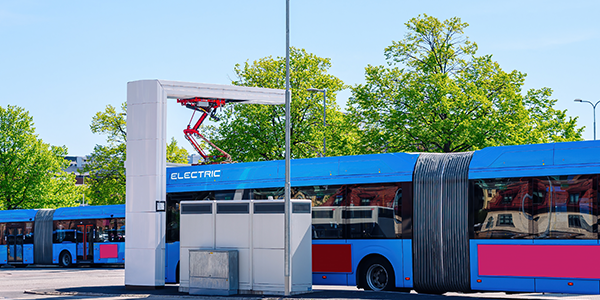
The transition to a public transport systems based on battery electric buses (BEBs) is becoming a global trend for decarbonizing urban mobility, including Brazil. However, this process faces structural obstacles that require coordinated action from the public sector, private sector, and financial institutions. A recent study published by the National Bank for Economic and Social Development (BNDES) analyzes these challenges, highlights successful international experiences, and provides guidelines to enable electrification on a national scale.
Challenges of electrifying the bus fleet in Brazil
Despite the environmental and operational benefits, the adoption of BEBs in Brazil faces four main barriers:
How much does an electric bus cost?
Electric buses have a significantly higher purchase price compared to conventional diesel models - between 3.1 and 4.9 times more expensive, according to data from the São Paulo City Hall. This price difference, typical of emerging markets, stems from the lack of production scale, the unpredictable demand, and the incipient competition among manufacturers.
Planning a transition to an electric bus fleet
The transition to electric buses requires a redesign of operational and business models, including the definition of charging strategies, adaptation of electrical networks, and revision of concession contracts. Many municipalities overlook these steps, focusing solely on vehicle acquisition, which can compromise the feasibility of the projects.
The number and location of charging points, for example, must be planned based on bus routes and battery range requirements. The range, in turn, affects the battery's weight and volume, and consequently, the passenger capacity of the bus, directly influencing the required fleet size. Additionally, the available electrical voltage at the sites designated for charger installation will directly affect the costs and timeline for deploying the charging infrastructure.
How to cover the costs of bus electrification?
The limited financial capacity of operators makes it difficult to bear the substantial investments required for vehicle acquisition and infrastructure implementation. It is important to note that, as public transportation is an essential service, the revenue generated from operations is constrained by the principle of affordable fares. In this context, public sector co-participation in the acquisition often becomes a necessity.
Recent experience points in this direction and shows that municipalities have taken the lead in this process, either through direct purchase and subsequent transfer to operators under commodatum contracts, or through investment subsidies.
Instruments such as Refrota (New PAC) and the Climate Fund have played a key role in enabling financing.
How to make a business model feasible for the adoption of electric buses in Brazil?
The traditional structure of transport concessions, where operators are responsible for purchasing and maintaining vehicles, has proven inadequate for electrification. The increased investment required by the electrification agenda for a rethinking of the concession model and the roles assigned to operators. This includes balancing risks, securing resources for investment, defining performance indicators, and establishing requirements for bidders.
Alternatives such as fleet leasing and public-private partnerships (PPPs) have been tried.
Lessons from international experiences
International cases demonstrate that successful electrification depends on robust public policies and innovative financing models:
Shenzhen (China): The first city in the world to achieve 100% fleet electrification, thanks to government subsidies for fleet acquisition and charging infrastructure. As a major bus manufacturer, China integrated urban planning with industrial development to support the transition.
Santiago (Chile): Outside China, the Chilean capital is the city with the largest electric bus fleet in the world. Like Shenzhen and Bogotá, it has a fleet leasing model for operators.
India: In Delhi, as in London, vehicles are owned by the operators, who received public subsidies for acquisition. Similar to China, industrial development was a key component of the national electrification strategy. Aggregated procurement helped reduce prices by up to 48% and stimulated local production.
Guidelines for a National Electrification Program
Preparation of preliminary projects for the electrification of bus fleets
To ensure the viability of municipal electrification projects, it is essential to prepare comprehensive preliminary studies, including technical studies (operational planning, charging strategies, fleet specifications and sizing, and identification of optimal charging locations); financial studies (should consider long-term cost reductions in the transportation system), and legal studies (to enable the proposed acquisition and operation model, respecting existing regulations and contracts).
Aggregated Procurement
The adoption of consolidated bidding processes for buses and chargers—similar to the Caminho da Escola program—can reduce costs through economies of scale and increased competition among manufacturers. In the case of buses, in addition to technical and financial studies that allow the industry to organize itself to meet demand, it is necessary to negotiate a certain degree of flexibility, considering the specific characteristics of each transportation system, wich may require adjustments to the models to be Purchase.
Financing Solutions: predictability and clear rules
Predictable financing with clear access rules is essential for planners to properly develop projects. Expanding credit lines with attractive rates, such as those offered through the Climate Fund and FGTS, along with sovereign guarantees and low-cost resources for critical infrastructure are some of the possible solutions to support the electrification of bus fleets.
Why electric buses in Brazil?
Assuming that the program could reach 50% of bus sales within 10 years, the benefits would include:
- A reduction of 3.9 million tons of CO₂ annually.
- Improved air quality and public health.
- Stimulatiion of domestic industry and creation of green jobs.
The transition to electric buses in Brazil is not only an environmental necessity, but also a strategic opportunity to modernize public transportation, reduce emissions, and boost the green economy. Although the challenges are significant—such as high costs, the need for integrated planning, and limited financing models—international experiences prove that innovative solutions and robust public policies can accelerate this transformation.
The article "Boosting the Adoption of Electric Buses in Brazil" presents guidelines to enable electrification on a national scale, aggregated procurement, accessible financing, and well-structured projects. If adopted, these measures could put Brazil on the path to sustainable mobility, with tangible benefits for the climate, public health and national industry.