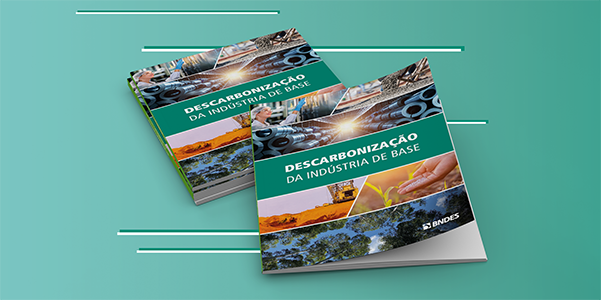
Following the executive summary presented in August 2024, we are now releasing the full study Decarbonization of the basic industry.
Based on the Seminar on Decarbonization of the basic industry, the publication organises the in-depth and diverse content discussed at the event, which was attended by entities representing the cement, fertilizer, steel, chemical, forestry, and mining sectors, as well as academia, the National Council for Industrial Development and the Secretariat for Institutional Relations of the Presidency of the Republic.
Sectoral reality: decarbonization agendas
The discussion, a record of what was presented by industry representatives during the event, provides a comprehensive overview of each basic industry sector, with explanations of their production processes, identification of the sources of greenhouse gas emissions and presentation of their decarbonization agendas. Success stories from companies are also presented throughout the text, illustrating different routes towards this greener future.
The publication Decarbonization of the basic industry presents the main climate scenarios for the Brazilian economy and the importance of policy instruments for progress on the topic; it also addresses how these scenarios relate to the basic industry, indicating its potential contributions to a low-carbon economy and cross-cutting decarbonisation strategies, applicable to various sectors of this industry.
Basic industry: Brazilian advantages
The discussion demonstrates clearly the privileged position of the basic industries in Brazil, due to factors such as the wide availability of land beyond its use for food production and biodiversity maintenance; the high rate of plant growth and proven capacity for large-scale production of certified biomass; the availability of water; high-quality mineral reserves, including iron ore and minerals critical to the energy transition; a predominantly renewable energy matrix with potential resources in terms of quality and quantity; and human capital and science and technology infrastructure. Among these, it is worth highlighting Brazil's competitive edge in the sustainable use of biomass, capable of replacing fossil fuels in various sectors.
The competitive advantages mentioned above and previous investments in greater operational and environmental efficiency often mean that Brazilian industry's production is lower in carbon intensity than that of other producing countries for the same technologies. However, despite the efforts already made, there is still a long way to go to meet the current carbon reduction and neutrality targets.
The implementation and pace of progress of these routes will depend directly on the investment capacity of stakeholders in Brazil. Several countries have implemented robust policies that include financing and risk-sharing instruments, the internalization of carbon costs through market mechanisms and border adjustment measures, as well as other efforts to boost the development of new technologies and international cooperation.
These policies are crucial to make transformative investments in industries with high idle capacity, enable capital-intensive projects for new plants that incorporate less consolidated technologies, increase the competitiveness of low-carbon routes vis-à-vis consolidated routes based on fossil resources, mature regulations on priority routes, such as hydrogen and biomethane, ensure the availability, sustainability and cost of essential materials, and enable technological learning and the development of new routes.
The establishment of appropriate public policies, strengthening international cooperation and partnership agendas, promoting R&D and the integration of new technologies into processes, in addition to raising awareness of the urgency of climate change, are necessary conditions for the country to overcome these challenges in favour of expanding investments.