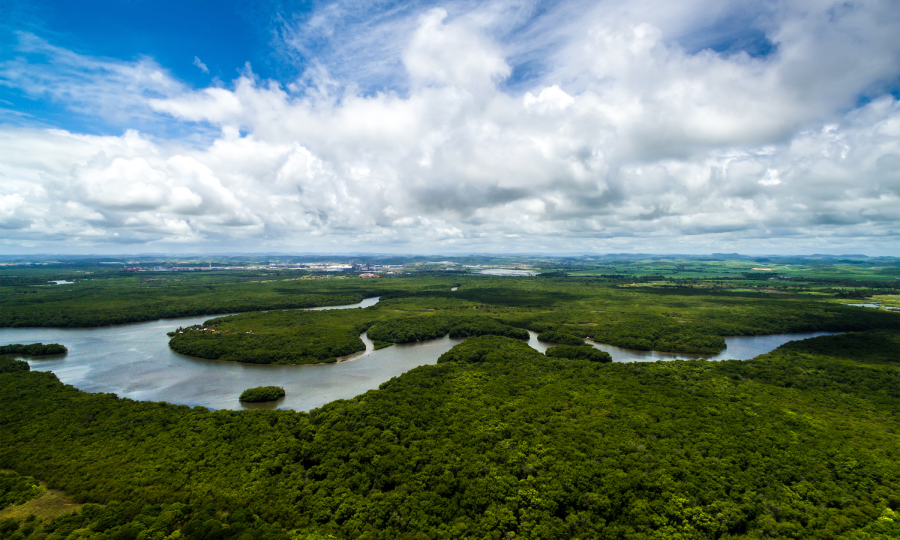
COP was created by the United Nations Framework Convention on Climate Change (UNFCCC) and takes place annually. For the first time, the conference will be held in Brazil, in the heart of the Amazon biome.
Understanding more about the Conference of the Parties, its objectives, and how the event works helps us grasp its importance in today’s context and for the future of our planet.
What is the UNFCCC?
The United Nations Framework Convention on Climate Change (UNFCCC) was established during the United Nations Conference on Environment and Development (Rio-92).
In effect since 1994, it establishes and recognizes the need for global action and promotes international cooperation in the fight against human-induced climate change. Currently, the UNFCCC has 198 member countries.
What is COP?
The UNFCCC created the Conference of the Parties (COP) as the body responsible for making the necessary decisions to implement the commitments made by the countries that signed the convention. The first meeting took place in 1995, in Berlin, Germany.
Since then, the Conference of the Parties has been held annually with the goal of implementing, monitoring, and updating measures aimed at addressing the climate crisis, especially the reduction of greenhouse gas emissions, in an effort to curb global warming.
Who takes part in the Conference of the Parties?
The meeting brings together representatives from the 198 signatory countries of the UNFCCC, including world leaders, scientists, non-governmental organizations, civil society representatives, governments, the private sector, and international organizations.
Country delegations include heads of state, ministers, diplomats, and technical experts who are responsible for formulating climate agreements.
Academic representatives contribute with technical and scientific knowledge, while non-state organizations and civil society representatives offer perspectives from various impacted groups, influencing the discussions and political decisions made during the conference.
Why is COP30 taking place in Brazil?
Since its inception, the COP presidency rotates among the UN’s five geographic regions. For each edition, UNFCCC technical representatives meet to choose the next host city.
The selection of Belém as the host city for COP30 was announced in December 2023, during COP28 in Dubai. In 2024, COP29 was held in Baku, Azerbaijan.
This will be the first time a COP is held in Brazil. For the organizers, choosing Belém—located in the heart of the Amazon, the world’s largest tropical forest—highlights the region’s relevance in discussions on tackling the climate crisis.
What topics will be discussed during COP30?
The main topics to be discussed at COP30 are organized into five thematic pillars and one cross-cutting theme:
- Transition in the energy, industry, and transportation sectors;
- Sustainable management of forests, oceans, and biodiversity;
- Transformation of agriculture and food systems;
- Building resilience in cities, infrastructure, and water;
- Promotion of human and social development; and
- Catalysts and accelerators, including financing, technology, and capacity building (cross-cutting theme).