How does the sanitation sector both impact and depend on nature?
Sanitation - including water supply, sewage treatment, and solid waste management - is a fundamental human right, and its universalization is one of the United Nations' Sustainable Development Goals (SDGs). This sector is highly dependent on and impacts nature, being strongly affected by population growth. The current global material flow -from consumption to disposal- combined with the direct link between water and sewage services, climate change, and water availability, highlights the urgent need for transformative action.
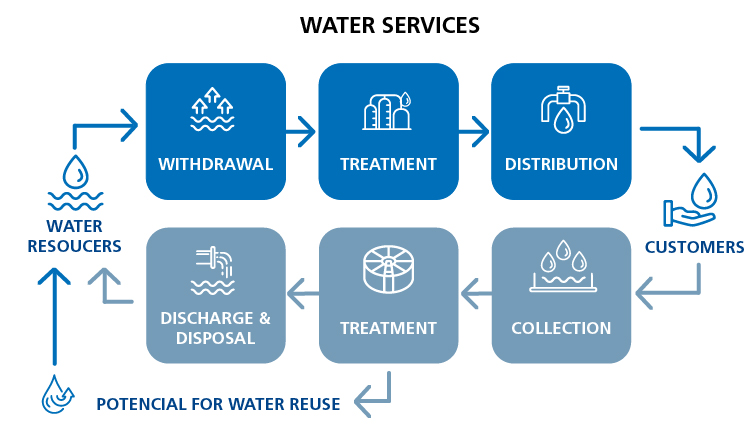
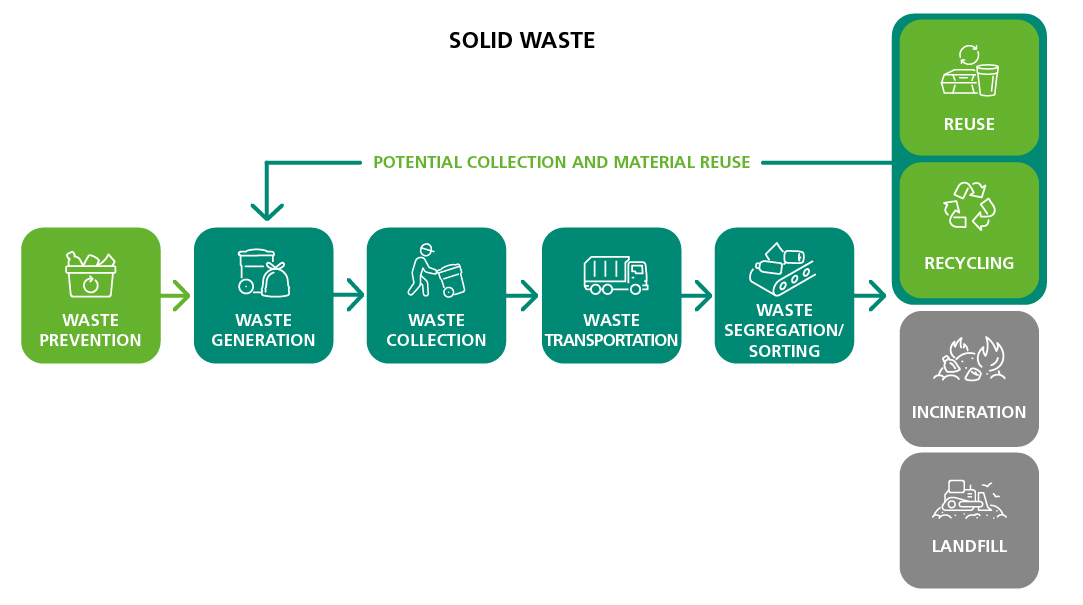
The sanitation sector's main dependencies on nature include:
Materials
Water supply depends on the hydrological cycle. The value chain relies on both surface water (lakes, rivers, canals, etc.) and groundwater as essential inputs. Water quality also directly affects operation, and water is also used for cooling and heating equipment, as well as cleaning, sorting, and processing waste.
The sector's operations depend on energy to pump water and sewage, transport waste, and maintain infrastructure efficiently.
The sector also depends on soil quality and availability. As part of the hydrological cycle, soil plays a key role in water storage, collection, transmission, and purification. Suitable soil also supports the decomposition of organic waste and stabilizes landfills. Moreover, having access to appropriate soil can reduce the distance waste must travel for disposal.
Ecosystem Services
Climate regulation services are vital to the sanitation sector. Droughts, for instance, can compromise water supplies, while soil degradation reduces the capacity to absorb carbon from organic waste. Access to adequate soil supports efficient waste management.
Protection against natural hazards: Measures to prevent floods, storms, and erosion play a key role in ensuring the proper treatment of water and waste.

What are the impacts of the sanitation sector on nature?
 |
Climate change: due to greenhouse gas (GHG) emissions, whether from the use of fossil fuels in transportation, the exposure of sewage and solid waste during the treatment process, excessive discharge into water bodies, or improper disposal in soil (dumps or landfills) and incineration. |
 |
Land and ocean use change: due to the degradation of natural habitats and ecosystems – the diversion of water flows and the construction and expansion of sewage and solid waste treatment plants can lead to environmental and land destruction, impacting the ecosystem and biodiversity. |
|

|
Resource use and replenishment, through the consumption and degradation of water beyond its replenishment capacity, especially due to accidents and inadequate operations such as oil spills and dam breaches, which harm terrestrial and marine life. |
 |
Poorly managed operations in the sector – the disposal of untreated water, defective infrastructure, and ineffective waste management – result in air pollution, soil degradation, water pollution (plastic pollution from other waste materials), and noise pollution, in addition to odor and light pollution that affect the natural environment, especially aquatic ones. |
 |
Loss of species due to inadequate sewage and solid waste management, which can lead to animal suffocation and disrupt food chains, introduce toxins, spread disease, and promote the spread and proliferation of invasive species. |
What actions can be prioritized by the sanitation sector to mitigate risks and create opportunities?
To avoid and reduce GHG emissions at sanitary plants and landfills: it is important to monitor operational processes, minimize transportation needs and use clean fuels, and reduce the exposure time of sewage and waste. Diverting organic materials by returning nutrients to the soil, prioritizing landfill gas recovery, detecting and repairing leaks, optimizing sanitation coverage, compacting landfills, and creating economic uses for process waste - such as producing fertilizer or generating energy - are also effective strategies.
To avoid and reduce energy and water consumption throughout the treatment process. This can be achieved by recycling water, developing alternative collection systems (especially for rainwater), offering appropriate services for untreated water, and using renewable energy sources. Encouraging a circular economy - from the use of recycled materials to promoting selective waste collection and establishing industrial waste banks - further supports recycling and reuse efforts.
To restore and regenerate waste treatment sites that impact the ecosystem: it is essential to avoid capturing water from regions experiencing water stress, prioritize the installation of facilities in already degraded areas to prevent further environmental damage, and adopt nature-based solutions throughout the treatment process. Additionally, creating habitats that provide shelter, food, and breeding grounds for endemic species.
To shift the focus from waste management to resource management: minimize the final deposition of waste and the disposal of gray water – wastewater generated from household activities such as washing clothes, dishes, and bathing. This shift can be guided by the E4R principle: avoid generating waste, reduce consumption, reuse materials, recycle resources, and utilize residual waste. It also requires designing products suitable for reuse and recycling and investing in improved systems for material collection and processing.