Menu

SHOWING RESULTS FOR

All themes

Select a theme
All
Accountability
Aerospace and defense
Agribusiness
Agriculture and livestock
Amazon Fund
Amazon
Audiovisual
Automotive sector
BNDES Award
BNDES Magazine
BNDES Sectorial
BNDES
Base industry
Biodiversity
Bioeconomy
Biofuels
Blue economy
Carbon credit
Chemical industry
Circular economy
Civil construction
Clean energy
Climate change
Commerce and services
Cooperativism
Covid-19
Critical minerals
Culture economy
Decarbonization
Discussion paper
Diversity
Education
Employment
Energy transition
Energy
Export
FAT
Family agriculture
Financing
Food and beverages
Forests
GDP
Governance
Health
Historical heritage
Impact
Industrial policy
Innovation
Investment
Latin America
Logistics
Macroeconomics
Memory
Microcredit
Naval industry
Oil and gas
Paper and cellulose
Privatization
Project structuring
Public policies
Publication
Report
SDGs
Sanitation
Small business
Smart cities
Social security
Startups
Sustainability
Telecommunications
Transportation
Urban mobility
Urban solid waste
Capa da noticia - <p>Biodiversity and the energy sector</p>
Biodiversity
Post

Biodiversity and the energy sector

Capa da noticia - <p>Biodiversity and the sanitation sector</p>
Biodiversity
Post

Biodiversity and the sanitation sector

As discussed in previous posts on the energy and construction sectors, in order to complement local and global initiatives already underway, it is essential that companies act responsibly, striving for a commitment to sectoral transformation to reduce pressures on nature and biodiversity. Let's explore how the sanitation sector both impacts on and impacts nature, and the opportunities to begin this transformation today.
Capa da noticia - <p>Key agreements on biodiversity, bioeconomy, and nature-based solutions</p>
Biodiversity
Post

Key agreements on biodiversity, bioeconomy, and nature-based solutions

In this fourth post of the Biodiversity series, we’ll explore the main agreements and references on the topic, as well as the opportunities within the bioeconomy and nature-based solutions.
Capa da noticia - <p>Impacts on biodiversity and planetary boundaries</p>
Biodiversity
Post

Impacts on biodiversity and planetary boundaries

In this third post of the Biodiversity series, we will discuss what affects biological diversity and planetary boundaries.
Capa da noticia - <p>Discussion paper presents BNDES data from the last thirty years</p>
Economy and development
Post

Discussion paper presents BNDES data from the last thirty years

Discussion Paper No. 163, “Three Decades – BNDES After Stabilization: 1994–2023”, authored by BNDES economists Fabio Giambiagi, Gilberto Borça Jr., and Letícia Magalhães, presents a set of financial and operational data from the Bank covering the period from 1994 (in some cases) to 2023. In addition to helping readers better understand BNDES’s performance, the study aims to serve as another vehicle for institutional accountability.
Capa da noticia - Public-private partnerships and the challenge of expanding preschool education in Brazil
Social and culture
Post

Public-private partnerships and the challenge of expanding preschool education in Brazil

Article in Revista do BNDES 59 presents the main challenges faced by public entities in structuring education PPPs, as well as lessons learned and possible solutions for adopting these models, based on the experience of BNDES teams.
Capa da noticia - <p>Electric buses in Brazil: challenges, international experiences, and proposals</p>
Infrastructure
Post

Electric buses in Brazil: challenges, international experiences, and proposals
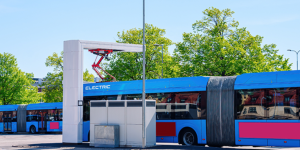
The transition to electric buses in Brazil is both an environmental necessity and a strategic opportunity. Although the challenges are significant, international experiences prove that innovative solutions and robust public policies can accelerate this transformation.
Capa da noticia - Conservation units in Brazil: types and contributions to development
Environment and climate
Post

Conservation units in Brazil: types and contributions to development

Conservation units are areas with significant natural features, established by public authorities, whose purposes include the preservation, sustainable use, and restoration of natural environments.